Essential Oils for Wellness in Dubai’s Climate and Air-Conditioned Interiors
The hot desert climate with high temperatures and low natural humidity quickly changes the feeling of home and office. When the air can warm up to about 40 °C in summer, and the air conditioning is almost always working inside, the indoor microclimate of the room becomes not a background, but a constant factor of well-being. Dry air, dust, sudden changes between the street and the room all affect the respiratory tract, skin, sleep and the ability to keep concentration. Here, aromatherapy and essential oils in the diffuser are perceived not as an ornament, but as a tool that helps to adjust the air quality and the atmosphere of tranquility without unnecessary fuss, much like Aromatherapy Massage Dubai.
Climate, Air-Conditioned Rooms And Dry Air

In regions with a desert climate, the feeling of dryness occurs quickly. Air-conditioned rooms enhance this effect because cooling the air often reduces humidity even more. As a result, the interior space may seem “sterile”, but at the same time it is uncomfortably dry. There is dry skin, irritation of mucous membranes, sore throat, discomfort in the nasopharynx. In some people, the sensitivity of the respiratory tract increases, and dust and allergens in the air are more noticeable. Even a short day at the office can end with a feeling of fatigue, although physically the person hardly moved.
In such conditions, the diffuser works as a small microclimate regulator. It sprays microparticles of water and essential oils, which helps add a feeling of softness to the air and reduces the “hardness” of dry air. This does not negate conditioning, but it can make the indoor environment more comfortable for breathing and for the skin.
Diffuser And Air Quality: Microparticles, Humidification, Cleaning
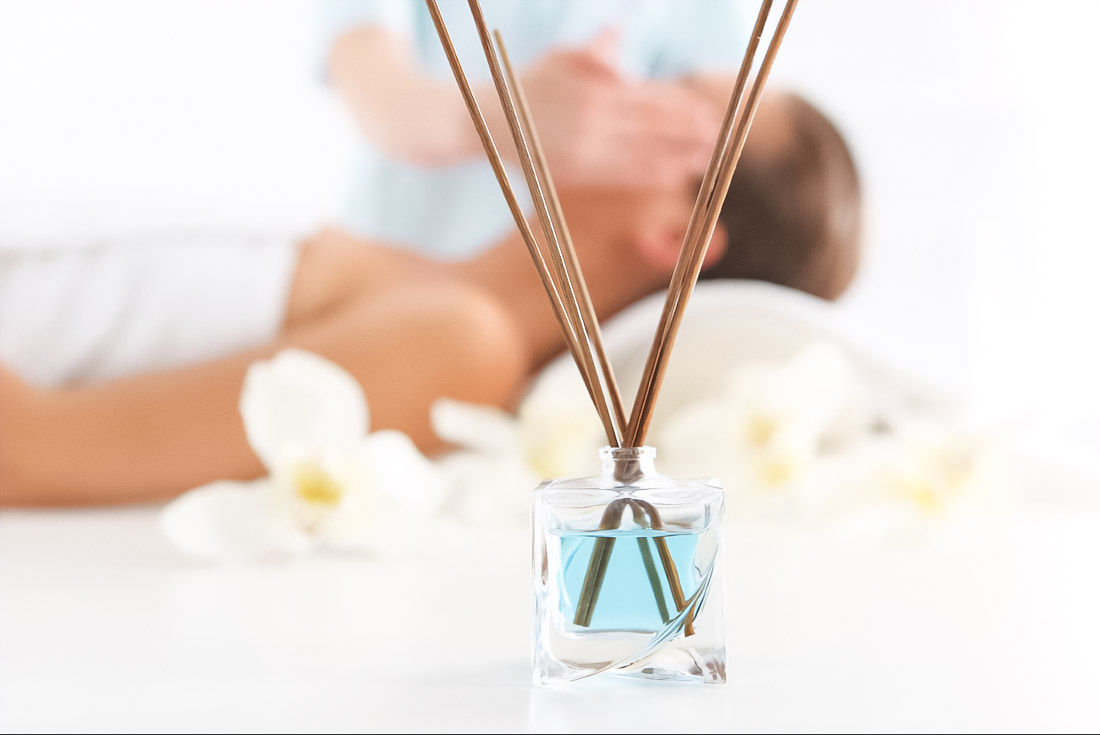
The mechanics are simple, but the effect is clear. The diffuser distributes microparticles in the air, creating a more pleasant indoor climate and a more even aromatization of the space. Unlike the methods where the fragrance is obtained by heating, modern devices can distribute the fragrance without heat and smoke. This is important if you want to keep the air feeling clean and avoid unnecessary irritants.
Inside a home or office, the air quality is made up of small things. There are kitchen smells. There is a “mustiness” after the windows are closed. There is a wet trace from the air conditioning, or vice versa a dry void in the air. Here, essential oils are often used as a way to refresh and create a feeling of purity. The text above mentioned the antibacterial, antimicrobial and cleansing properties of some oils, as well as the idea of “purifying the air” and reducing unpleasant odors. It is important to take this carefully: the diffuser is not a substitute for ventilation and cleaning, but it can maintain a feeling of freshness and a more pleasant atmosphere inside the room.
Well-Being, Nervous System And Productivity
Aromatherapy is not only related to the smell itself. When inhaled, aromatic molecules activate the olfactory system and are connected to the limbic system of the brain, which is involved in emotions and memory. Therefore, the same room can feel different if the aroma and general perception of the air change.
Two modes are important in everyday life. The first is relaxation. The key phrases here sound familiar: stress, anxiety, emotional balance, recovery, sleep. The diffuser helps to create an atmosphere of calm, especially in the evening, when you want to release tension and “turn off” the internal noise. The second mode is focus and energy. Lethargy often occurs in the heat, and then concentration, clarity, productivity, and vivacity are relevant. The refreshing effect and the feeling of clean air can maintain a working rhythm, especially in the home office or in the office.
It all comes down to a sense of well-being. Breathing comfort, skin condition, sleep quality, and stress tolerance are not separate “items”, but an interconnected system. The diffuser and essential oils become part of this system when they are used meaningfully: under the climate, under the room, under the real regime of the day. And then the inner space really begins to work for the person, and not vice versa.

Skydiver, hustler, record lover, Vignelli fan and critical graphic designer. Doing at the nexus of minimalism and computer science to express ideas through design. Let’s make every day A RAZZLE-DAZZLE MUSICAL.